- En
The key difference between a street light and a lamppost is that a street light refers to the lighting fixture (the luminaire that produces illumination), while a lamppost—more accurately called a street lighting pole—is the supporting structure that holds the light in place. In short, the light provides visibility, while the pole provides support and elevation.
This distinction is essential for engineers, contractors, and city planners because procurement, installation, and maintenance processes often treat these components separately. Understanding their differences helps prevent costly mistakes and ensures reliable, long-term street lighting systems.
Before diving deeper into the difference between street lights and lampposts, it's important to understand why street lighting systems matter.
Safety and Security: Proper illumination reduces accidents and discourages criminal activity.
Urban Functionality: Lighting supports 24-hour economies by making public spaces usable at night.
Energy Management: Modern systems with LEDs and smart controls improve energy efficiency.
Aesthetic Impact: Street lighting poles can enhance the appearance of urban landscapes when paired with decorative designs.
A street light is the luminaire that generates light. Its primary purpose is to ensure visibility on roads, walkways, and public spaces, improving both safety and usability.
Luminaire Housing: Protects the internal components from weather and dust.
Light Source: Modern systems use LEDs for higher efficiency and longer lifespan, replacing sodium and metal halide lamps.
Optical System: Lenses and reflectors direct light for uniform coverage.
Control Gear: Includes drivers, sensors, and photocells for regulating power and enabling smart features.
Street lights are evaluated based on luminous efficacy (lumens per watt), light distribution patterns, color temperature, and lifespan. These factors directly influence the safety and efficiency of street illumination.
A lamppost—or street lighting pole—is the structural support for luminaires. Its role is to provide the correct mounting height, stability, and durability for the lighting fixture.
Galvanized Steel: Most common due to strength and corrosion resistance.
Aluminum: Lightweight, corrosion-resistant, and ideal for coastal areas.
Concrete: Durable but less flexible in design.
Composite Materials: Increasingly used in specialty projects for lightweight applications.
Standard Poles: Functional, used for roads and highways.
Decorative Poles: Installed in parks, plazas, or historical districts.
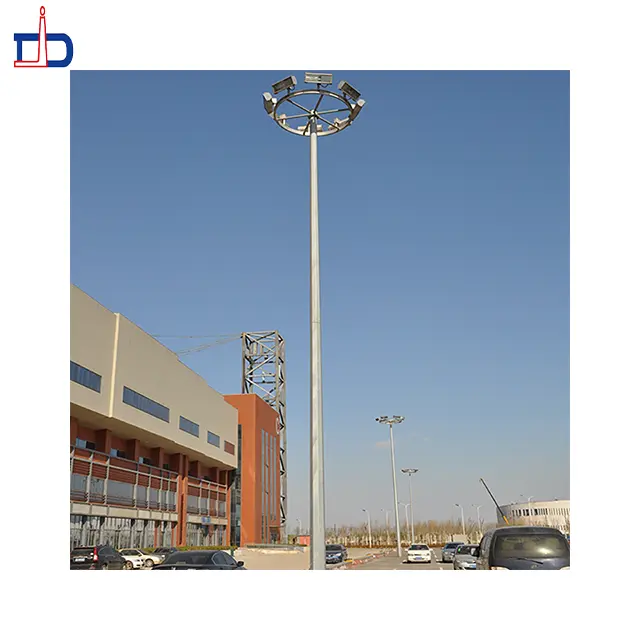
High-Mast Poles: Very tall poles (20–50 meters) for large-area lighting like highways and stadiums.
| Feature | Street Light | Lamppost (Street Lighting Pole) |
Definition | The lighting fixture producing illumination | The structural pole that supports the light |
Primary Role | Visibility and safety | Elevation and stability |
Main Components | Luminaire, LED/driver, optics | Pole body, base, anchor bolts |
Material | Aluminum housing, optics, electronics | Steel, aluminum, concrete, or composites |
Design Focus | Light distribution, energy efficiency | Structural strength, durability, and aesthetics |
Service Life | 10–20 years (depending on technology) | 25–50 years (depending on material) |
Street lights and street lighting poles are often supplied by different manufacturers. Confusing the terms during procurement can lead to incomplete orders or incompatible components.
Modern LED luminaires may require different mounting brackets compared to older fixtures. Engineers must ensure pole compatibility to avoid retrofitting delays.
While luminaires typically need replacement every 10–15 years, poles can last decades. Differentiating between the two helps budget long-term maintenance more accurately.
Pole height affects illumination spread and uniformity. Standard poles range from 6 to 12 meters, while highways often require higher mounting.
Poles must withstand wind loads, vibration from traffic, and the weight of additional equipment (like signage or surveillance cameras).
Galvanization, powder coating, or paint systems extend pole lifespan, especially in coastal or industrial environments.
In urban centers, poles are often designed with architectural finishes to complement the environment while maintaining functionality.
Modern lampposts are no longer limited to holding lights. They are evolving into multi-functional smart infrastructure:
Smart City Integration: Hosting sensors for traffic, air quality, or weather monitoring.
Telecommunications: Supporting 5G small cells and Wi-Fi routers.
Security: Integrating CCTV cameras and emergency communication devices.
Sustainability: Some designs integrate solar panels to reduce grid dependence.
Site Survey: Engineers determine placement based on photometric studies and traffic flow.
Foundation Construction: Poles are anchored with concrete foundations and anchor bolts.
Pole Erection: Steel or aluminum poles are installed using cranes or lifting equipment.
Luminaire Mounting: Street lights are attached at the correct height and angle.
Electrical Connection: Fixtures are wired to the grid or solar systems.
Testing and Commissioning: Lighting levels are checked for compliance with standards.
Lifespan: LEDs last 50,000–100,000 hours (~10–20 years).
Maintenance Needs: Periodic cleaning, driver replacement, and sensor calibration.
Lifespan: Typically 25–50 years, depending on material and environmental exposure.
Maintenance Needs: Regular inspections for corrosion, cracks, and foundation integrity.
Are street lights and lampposts sold separately?
Yes. Street lights (luminaires) and street lighting poles are usually procured separately to allow flexibility in design and compatibility.
Can one lamppost support multiple street lights?
Yes, especially in wide roads or intersections, poles may be designed with dual or multi-arm brackets.
What is the standard height of a street lighting pole?
Most poles range from 6–12 meters. However, highways or high-mast systems may use poles up to 50 meters.
Which is more expensive: the street light or the lamppost?
Generally, street lighting poles represent the higher initial investment due to material and foundation costs, while street lights incur higher lifecycle costs due to replacement cycles.
The difference between a street light and a lamppost is straightforward yet significant: the street light is the fixture that generates illumination, while the lamppost—more accurately a street lighting pole—is the structure that supports it.
For municipalities, contractors, and planners, distinguishing these terms ensures accurate project planning, cost control, and long-term system performance. Together, street lights and poles form the foundation of safe, efficient, and modern urban infrastructure.