- En
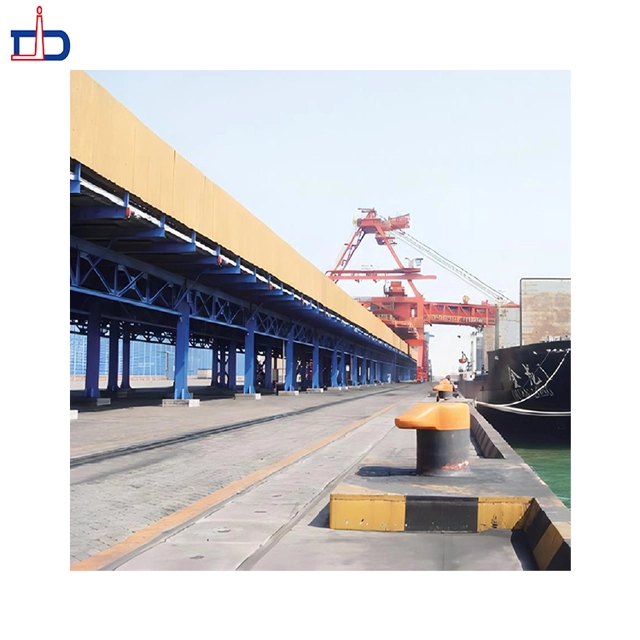
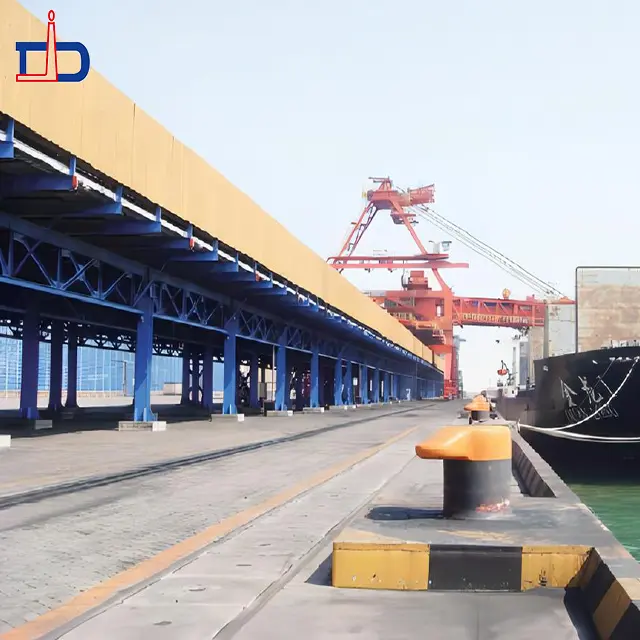
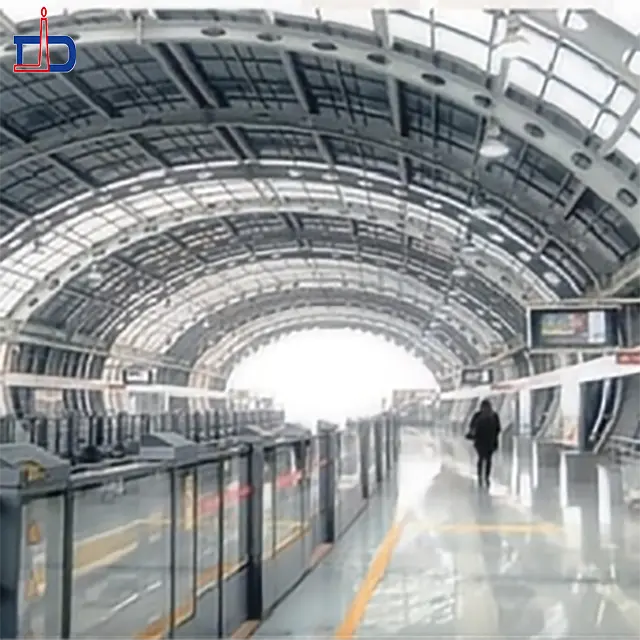
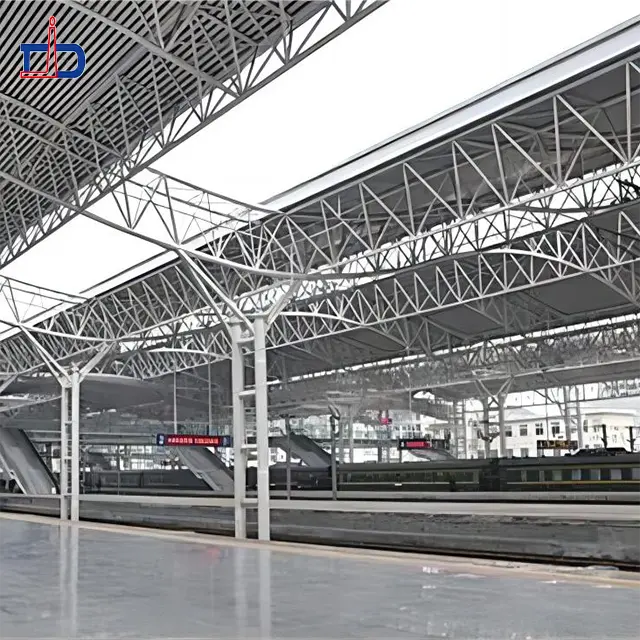
The Steel Train Station is a state-of-the-art transit hub, crafted from high-grade steel for unmatched durability and architectural elegance. Its innovative design facilitates smooth passenger flow and efficient train operations, making it a keystone of modern urban infrastructure. The structure’s resilience against weather and wear ensures longevity, while its eco-friendly construction practices underscore a commitment to sustainability. This station is not just a transit point but a landmark that enhances the urban landscape and supports the growth of sustainable cities.
| No | Item | Data |
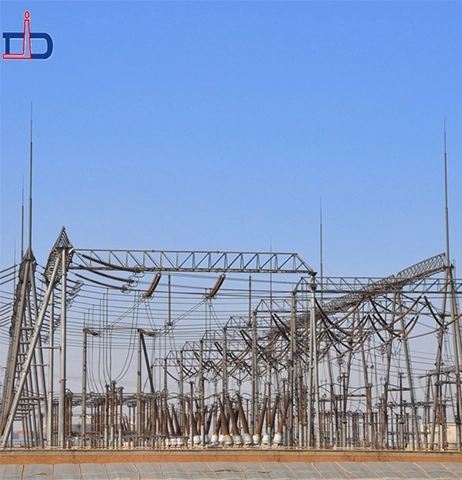
| 1 | Use | Rigid frame combinations for suspension conductors, support conductors,or switchgear and other electrical equipment |
| 2 | Material | Q235B/355B/420B/420C |
| 3 | Country of origin | Tianjin, China |
| 4 | Brand name | juding |
| 5 | Joint of Poles | Slip joint,flanged connected |
| 6 | Manufacturing standard | GB/T2694-2018 |
| 7 | Standard | SO19001:2015Products are processed in strict accordance with GB/T2694-2018,DL/T646-2012,YD/T757-2013 and other national current standards. |
| 8 | Length of per section | Within 13M once forming |
| 9 | Welding Standard | AWS(American Welding Society)D 1.1 |
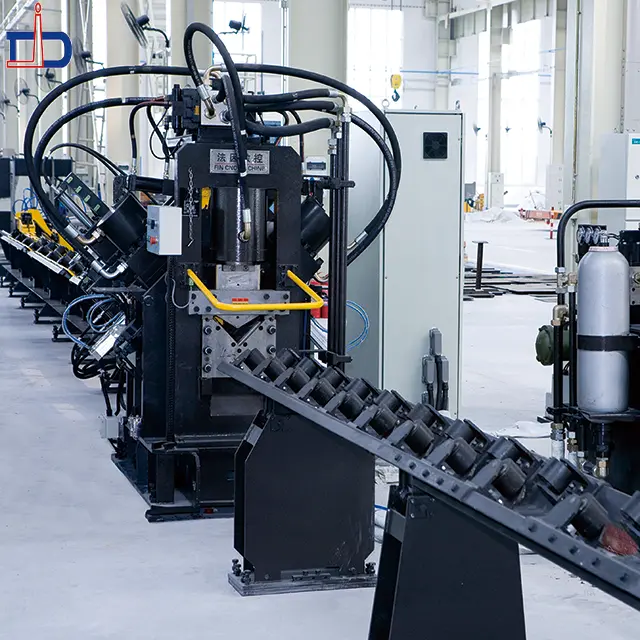
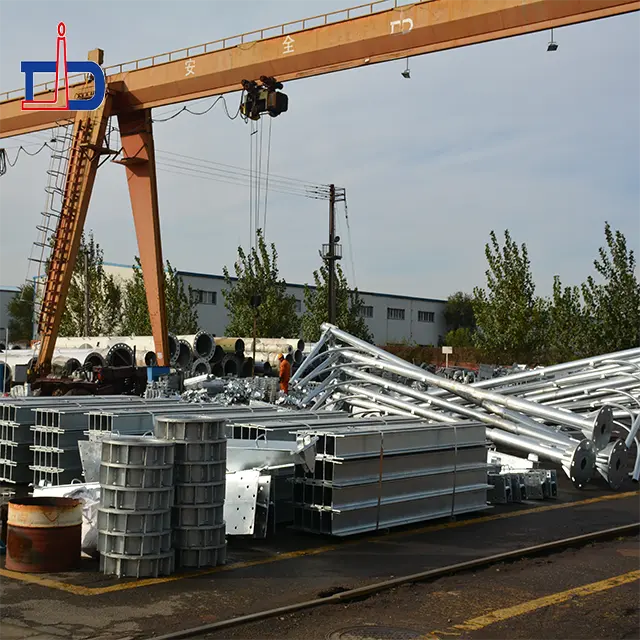
| 10 | Production Process | Raw material test-cutting-bending-welding-dimension verify-flange 10 welding-hole drilling-sample assemble-surface clean-galvanization or power coating/painting-recalibration-packages |
| 11 | Packages | according to client's requirement |
| 12 | Life Period | More than 30 years,it is according to installing environment |
Steel plays a pivotal role in modern train station construction, serving as the backbone for designs that prioritize durability, flexibility, and aesthetic appeal. As a core material in the steel railway system, its inherent strength allows for the creation of vast, open spaces free from obstructive columns, enabling architects to design stations that are not only functional but also visually striking. The versatility of steel accommodates innovative architectural concepts, including complex geometries and sweeping curves, which contribute to the iconic status of many contemporary train stations.
Furthermore, steel's adaptability facilitates the integration of advanced technologies and sustainable building practices, aligning modern stations with long-term railway steel infrastructure planning. The material's prefabrication capabilities streamline the construction process, ensuring precision and reducing on-site construction time, which is crucial in minimizing disruptions in busy urban areas. Additionally, steel's durability and ease of maintenance guarantee the longevity of train stations, ensuring they can withstand the rigors of heavy daily use while maintaining their aesthetic qualities.
In summary, steel, including steel tube towers, is indispensable in modern train station construction, enabling the realization of cutting-edge designs that meet the demands of contemporary transportation infrastructure.
A Steel Train Station is a modern structural solution designed to provide durability, safety, and efficiency for railway infrastructure projects. Built primarily with high-strength structural steel, these stations combine functionality with architectural flexibility—offering reliable performance for both urban and high-speed rail systems. The integration of train rail steel in these projects ensures that both the station and the tracks meet the highest standards of safety and durability.
High Structural Strength – Engineered with robust steel frames to withstand heavy passenger flow, dynamic loads, and long-term operation.
Durability & Longevity – Galvanized and coated steel ensures corrosion resistance, even in harsh climates.
Flexible Design – Suitable for modular construction, allowing customization in size, layout, and architectural style.
Fast Installation – Prefabricated steel components reduce on-site construction time, minimizing project delays.
Cost Efficiency – Lower maintenance requirements compared to traditional concrete structures.
Safety Standards – Designed to meet international railway construction codes for seismic resistance, wind loads, and fire safety.
Urban metro and subway stations
High-speed railway hubs
Regional commuter train stations
Modern transport interchanges
Architectural Versatility: Allows creative station designs with large spans and open spaces.
Sustainability: Steel is recyclable, making these stations eco-friendly and aligned with green building standards.
Scalability: Easily adaptable for future expansions or upgrades in railway capacity.