- En

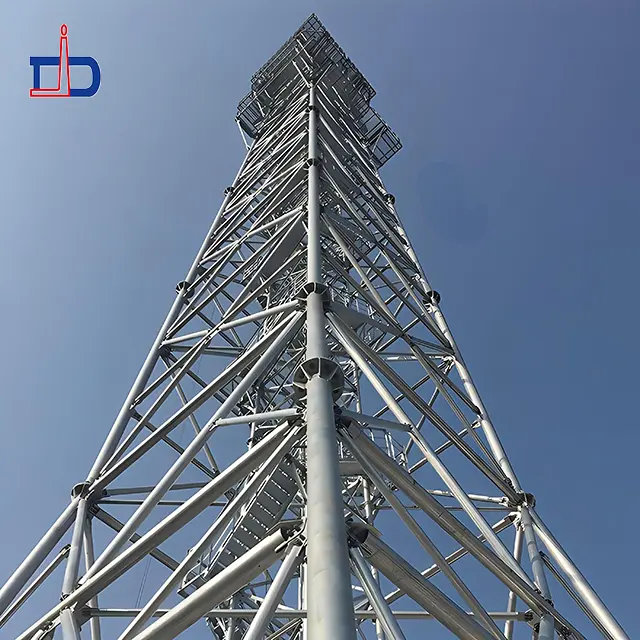
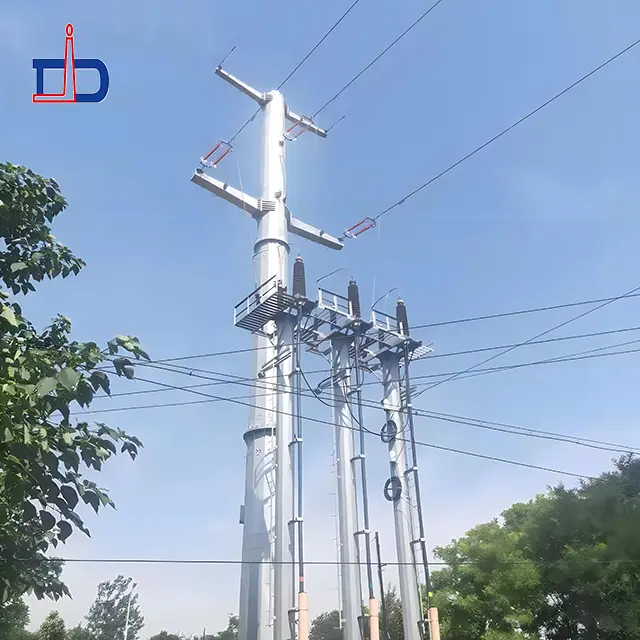

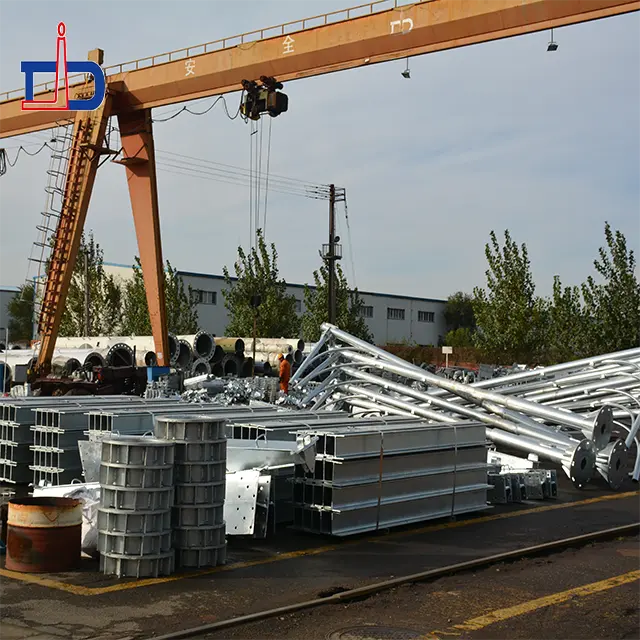
The Electric Steel Tubular Tower is a robust and versatile structure designed for power transmission and distribution. Crafted from high-quality steel, it ensures durability and reliability under various environmental conditions. Its tubular design offers superior strength and stability, making it an ideal choice for supporting overhead power lines across vast distances. Easy to install and maintain, this tower is a cost-effective solution for modern electrical infrastructure needs.
| No | Item | Data |
| 1 | Height | From 10M-100M or according to client's requirement |
| 2 | Suit for | Electric Power Transmission and Distribution |
| 3 | Shape | Polygonal or Conical |
| 4 | Material | Normally Q235B/355B/420B/420C...Yeild Strength≥235MPa |
| 5 | Q355B, Yeild Strength≥345MPa | |
| 6 | As well as Hot Rolled coil from ASTM572, GR65, GR50, SS400 | |
| 7 | Power Capacity | 10kV to 1000kV |
| 8 | Tolerance of the dimension | According to client's requirement |
| 9 | Surface treatment | Hot-dip-any other standard by client's requirement |
| 10 | Joint of Poles | Slip joint,flanged connected |
| 11 | Standard | SOI9001:2015, Products are processed in strict accordance with GB/T2694-2018,DL/T646-2012,YD/T757-2013 and other national standards |
| 12 | Length of per section | Within 13M once forming |
| 13 | Welding Standard | AWS(American Welding Society)D 1.1 |
| 14 | Production Process | Raw material test-cutting-bending-welding-dimension verify-flange welding-hole drilling-sample assemble-surface clean-galvanization or power coating/painting-recalibration-packages |
| 15 | Packages | according to client's requirement |
| 16 | Life Period | lifetime warranty, it is according to installing environment |
High structural stability: a common type of electrical power tower, the power steel pipe tower is made of high-strength steel, and through scientific structural design, it ensures that the tower has good overall stability and wind and earthquake resistance. This stability is essential to guarantee the safe operation of transmission lines, especially under severe weather conditions.
Better economy: compared with the traditional angle steel tower, the power steel pipe tower is more economical and efficient in the use of materials. The cross-section performance of the steel pipe is superior, which can reduce the use of materials under the premise of ensuring structural strength and stability, thus reducing the project cost.
Installation is fast and convenient: the components of the electric power steel pipe tower are prefabricated in the factory, and the on-site installation is mainly carried out through bolting and other means, which greatly shortens the construction period and improves the construction efficiency. At the same time, prefabricated production also helps to ensure the quality of the components, reducing the uncertainty brought about by on-site construction.
Better aesthetics: power steel pipe tower has smooth lines, simple shape, compared with the traditional angle steel tower is more beautiful. In some areas with special requirements for landscape, power steel pipe tower can be better integrated into the surrounding environment, reducing visual interference.
Power Transmission and Distribution: Electric steel tubular towers are widely used in overhead transmission and distribution lines. Their tubular structure minimizes wind load and improves overall torsional resistance, ensuring reliable power delivery even under heavy weather conditions.
Substation and Switching Structures: Steel tubular towers are also applied in substation gantries and switching yards. Their compact footprint and modular design allow flexible configuration in confined utility spaces.
Renewable Energy Integration: In wind and solar projects, electric steel tubular towers support grid interconnections and communication relays, ensuring stable data and power transmission between generation sites and control centers.
Telecommunication and Monitoring Systems: Steel tubular towers also serve as multi-functional structures for telecommunication antennas and surveillance systems, integrating both utility and communication functions efficiently.
Engineering and Fabrication Excellence
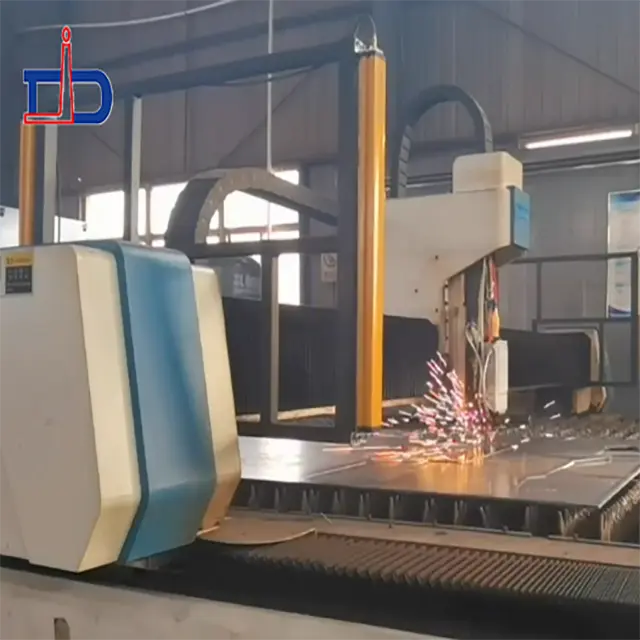
Electric steel tubular towers feature modular, segmental construction with slip or flange joints, reducing shipping dimensions and simplifying field assembly. Each segment is CNC-cut, pre-punched, and aligned with precision tolerances, ensuring consistent performance and faster erection on site.
Structural Strength and Wind Resistance
The streamlined tubular profile minimizes wind drag and enhances torsional rigidity. Compared with lattice structures, steel tubular towers exhibit superior strength-to-weight ratios and maintain excellent performance under high-wind or cyclone conditions, making them ideal for double-circuit power lines.
Rigorous Quality and Corrosion Control
All fabrication follows AWS D1.1 and ISO 3834 standards, with non-destructive testing (UT, MP, RT) on all critical welds. Hot-dip galvanizing (≥85 µm zinc layer, ISO 1461 compliant) ensures corrosion resistance exceeding 1,000 hours of salt-spray testing (ASTM B117). Each steel tubular tower is fully traceable by mill certificates and galvanizing reports.
Design, Packaging, and Installation Support
Our engineering team uses tools such as PLS-TOWER and STAAD.Pro to optimize structural design under site-specific wind, ice, and seismic loads. Each electric steel tubular tower is delivered with foundation drawings, preassembled hardware kits, and detailed installation manuals. Sea-worthy export packaging and third-party inspection (SGS, BV) guarantee reliable global delivery.
Proven performance in complex terrains (mountains, urban corridors, coastal regions)
Reduced visual footprint, better public acceptance in sensitive areas
Fast global delivery: 25–40 days production lead time
Full engineering support—pre-bid to energization
Global logistics network with deep-sea shipping capability
When selecting transmission line structures, the choice often comes down to tubular towers versus lattice towers. Both are widely used in power transmission projects, but they offer distinct advantages depending on the project’s location, design requirements, and cost considerations.
| Aspect | Electric Steel Tubular Tower | Lattice Tower |
Design | Smooth, closed tubular structure with fewer visible joints | Open-frame design made of interconnected steel angles |
Land Use | Requires less base area, suitable for urban and roadside projects | Requires wider foundation footprint due to larger base |
Aesthetics | Modern and sleek appearance, often preferred in cities | Industrial look, more common in rural or remote areas |
Aerodynamics | Reduced wind resistance due to tubular shape | Higher wind drag due to open lattice design |
Installation Speed | Prefabricated sections allow quicker installation | More complex assembly with multiple steel members |
Maintenance | Minimal—fewer joints and surfaces to corrode | Higher maintenance due to exposed connections |
Cost | Higher initial cost but lower long-term maintenance | Lower initial cost but higher maintenance over service life |
Durability | Excellent corrosion resistance with galvanization | Durable, but more prone to localized rust at joints |
1. What is the typical lifespan of an electric steel tubular tower?
With proper galvanization and routine inspections, an electric steel tubular tower can last 40–60 years or more, depending on environmental conditions.
2. How tall can a tubular tower be?
Tubular towers are highly versatile and can be designed from 20 meters up to over 60 meters in height, depending on voltage levels and terrain requirements.
3. Are tubular towers suitable for coastal or high-wind areas?
Yes. Their aerodynamic design reduces wind resistance, making them well-suited for coastal regions and areas prone to strong winds. Additional anti-corrosion coatings further enhance performance in marine environments.
4. What’s the difference between tubular and lattice towers?
The key difference lies in structure and application: tubular towers are closed, smooth structures that save space and reduce maintenance, while lattice towers are open-frame designs that are cost-effective and widely used in rural transmission networks.
5. Do tubular towers require more maintenance than lattice towers?
No. Tubular towers typically require less maintenance because they have fewer joints and surfaces exposed to corrosion.