- En
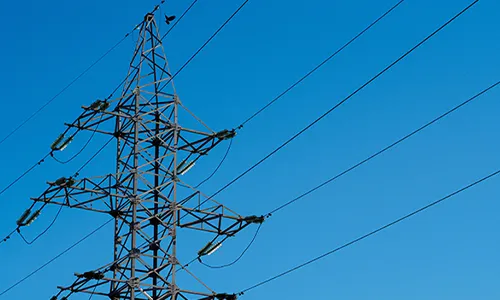
An electric transmission tower is a tall steel structure designed to support high-voltage power lines, enabling electricity to be transported over long distances from power generation plants to substations. Without these towers, modern power grids would not be able to deliver safe, reliable, and efficient energy to millions of homes, businesses, and industries.
Electric transmission towers are engineered to withstand extreme mechanical loads, harsh environmental conditions, and natural forces like wind or earthquakes. They play a critical role in maintaining clearance between energized conductors and the ground, preventing accidents, ensuring efficiency, and supporting the growing demand for energy worldwide.

Transmission towers are more than just steel frameworks—they are the backbone of electricity networks. Their importance lies in three key areas:
Power Delivery: Towers ensure high-voltage electricity travels seamlessly from remote generating stations to substations, where it is stepped down for local distribution.
Safety: Proper tower height and clearance protect people, infrastructure, and wildlife from accidental contact with live conductors.
Efficiency: By elevating conductors high above the ground, towers minimize power losses and interference caused by environmental obstacles.
In short, electric transmission towers are essential to ensuring that power grids remain stable, efficient, and reliable.
Like any engineered structure, a transmission tower consists of several critical components, each serving a unique purpose in supporting and protecting the power line system.
The main framework is typically a lattice steel structure, chosen for its strength-to-weight ratio. The body supports cross arms, insulators, and conductors while maintaining stability under heavy loads.
Cross arms extend horizontally from the tower body and hold the conductors (wires). Their design ensures proper spacing between phases to avoid electrical faults and arcing.
Insulators are vital for preventing current leakage from conductors to the steel tower. Typically made of porcelain, glass, or composite polymers, they also withstand mechanical tension.
The foundation anchors the entire tower to the ground, distributing structural loads and ensuring long-term stability. Depending on soil conditions, foundations may be concrete pads, piles, or grillage structures.
Transmission towers are categorized based on their function within the power line system:
Used along straight sections of power lines, suspension towers primarily hold conductors with minimal mechanical stress. They are the most common type due to their relatively simple design.
Tension (angle) towers appear at line deviations or turning points, where conductors are subjected to greater mechanical stress. Steel angle towers provide anchoring and stability for directional changes.
Found at substations or endpoints of transmission lines, terminal transmission towers serve as the final anchoring structures. They often feature reinforced designs to handle conductor termination loads.
Specially designed towers are used for unique conditions, such as river crossings, railway crossings, or areas with challenging terrain. These towers are often taller and sturdier to maintain required clearances.
The design of an electric transmission tower is a complex engineering task influenced by multiple factors:
Higher voltages require taller towers, longer insulators, and wider conductor spacing to prevent flashovers. Towers designed for 220kV, 500kV, or even 1000kV systems must meet stricter engineering standards.
Towers must withstand the combined weight of conductors, insulators, and environmental forces like wind, snow, or ice accumulation. Wind load calculations are critical in determining tower geometry.
In earthquake-prone regions, towers are designed with seismic resistance in mind. Similarly, environmental conditions like coastal salt exposure or desert sandstorms require material adaptations.
Galvanized steel is the most common choice due to its corrosion resistance. In areas with extreme conditions, additional protective coatings or stainless steel materials may be required.
The choice of materials affects durability, cost, and installation efficiency:
This is the industry standard for high-voltage towers. It offers strength, flexibility, and long service life when properly galvanized to resist corrosion.
Tubular steel poles are increasingly used in urban and suburban environments. They take up less space, have a sleek appearance, and can be pre-fabricated for faster installation.
For niche applications, engineers may use composite materials or combine steel with concrete to achieve specialized performance in difficult terrains.
Although both support electrical infrastructure, they serve very different purposes:
Voltage Difference: Transmission towers carry high-voltage power (110kV and above), while distribution poles typically handle voltages under 35kV.
Structural Complexity: Towers feature large steel frameworks, whereas distribution poles are often wooden or concrete.
Span and Coverage: Transmission towers span hundreds of meters, crossing rivers, highways, and valleys, while distribution poles supply electricity within neighborhoods and cities.
Understanding this difference helps clarify the distinct roles each plays in delivering power from the generating source to the end consumer.
Building an electric transmission tower is a multi-stage process requiring precision engineering:
Before construction, engineers conduct topographic surveys, soil tests, and environmental impact studies to determine the optimal route and tower locations.
Depending on soil conditions, foundations may involve deep piles, reinforced concrete pads, or grillage systems. The goal is to provide maximum stability for decades of service.
Towers can be assembled piece by piece on-site or pre-fabricated in sections. They are erected using cranes, helicopters, or gin poles, depending on terrain accessibility.
Once towers are in place, conductors are strung using tensioning equipment. Proper sag and tension are crucial to maintain safe clearances and ensure efficient power flow.
Transmission towers are designed to last 40–80 years with proper maintenance.
Routine inspections—both ground-based and aerial—help identify structural damage, corrosion, or conductor wear before they become critical issues.
Periodic re-galvanization or coating applications extend the life of steel towers, especially in humid or coastal environments.
Older towers may be reinforced or modified to handle higher voltage upgrades, heavier conductors, or smart grid monitoring systems.
Most towers range from 15 to 55 meters in height, though special towers for river crossings can exceed 100 meters.
On average, towers are spaced 300–500 meters apart, depending on voltage, terrain, and conductor design.
Safety includes ground clearance requirements, anti-climbing devices, aviation warning lights on tall towers, and regular inspections.
A well-maintained electric transmission tower can last five to eight decades, depending on materials, environment, and upkeep.
An electric transmission tower is far more than a steel frame—it is the backbone of the global energy system. From its carefully engineered components to its strategic placement across landscapes, the transmission tower ensures safe, efficient, and reliable electricity delivery.
By understanding their design, materials, and maintenance needs, industry professionals can appreciate the critical role these structures play in sustaining modern life. For utilities, contractors, and governments, investing in durable, high-quality towers is essential to building resilient and future-ready power infrastructure.