- En
For EPC contractors, transmission tower cost cannot be evaluated reliably by comparing the quoted price per ton alone. A meaningful comparison must establish whether suppliers are pricing the same tower geometry, design loads, steel grades, corrosion protection, accessories, testing requirements, packing method, and delivery scope.
In practice, the transmission tower price is influenced by both the quantity of steel required and the technical requirements built into the tower design. Two quotations with similar tonnage can therefore have significantly different final costs, while a lower price may simply indicate that important items have been excluded.
For procurement teams, the most reliable approach is to convert every supplier quotation into the same commercial and technical basis before making a purchasing decision.
The primary cost drivers are tower design, steel consumption, material specifications, manufacturing requirements, surface treatment, accessories, and logistics.
Tower height and configuration provide the starting point, but they do not determine the final cost by themselves. A 40 m tower designed for a relatively moderate line loading may require substantially less steel than a tower of similar height designed for high wind loads, heavy conductors, long spans, or demanding terrain conditions.
The foundation interface also matters. Base dimensions, anchor-bolt arrangements, leg configuration, and connection details can affect fabrication requirements and the overall tower package.
For EPC procurement, the quotation should therefore be evaluated against the complete technical specification rather than a single parameter such as height or weight.
Tower design directly affects power transmission tower cost because the structural system determines how efficiently loads are transferred through the tower.
Important design variables include tower type, body geometry, cross-arm arrangement, conductor configuration, ground-wire arrangement, wind and ice loading, line angle, span conditions, and required safety factors. Suspension towers, tension towers, terminal towers, and angle towers can have substantially different steel requirements even when they belong to the same transmission line project.
A tower designed for a higher transverse or longitudinal load may require larger sections, additional bracing, thicker members, or a different structural configuration. These changes increase both material consumption and manufacturing work.
For this reason, EPC buyers should compare suppliers using the approved tower drawings and design criteria, not merely a nominal tower height or estimated weight.
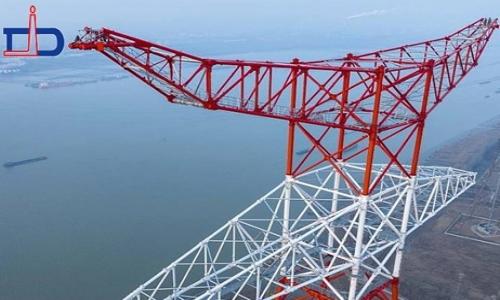
Price per ton is useful as a procurement reference, but it is not sufficient for comparing the complete transmission tower price.
A supplier quoting a lower steel price may have excluded items that another supplier has included. Common differences include:
tower accessories and attachment hardware
bolts, nuts, and washers
earthing components
step bolts or climbing devices
aviation markers where applicable
repair materials
galvanizing charges
inspection and testing
packing and export preparation
inland transportation
port handling
freight and insurance
There can also be differences in the material basis. One supplier may quote using a particular steel grade throughout the structure, while another may use different grades for primary and secondary members.
The correct comparison is therefore based on cost per complete tower package, with the same inclusions and exclusions clearly identified.
Steel grade, section size, plate thickness, and material availability all influence the final quotation.
Transmission towers are typically fabricated from structural steel members, plates, and connection components selected according to the project's design and applicable standards. Higher-strength steel can sometimes reduce structural weight, but its use does not automatically result in a lower total cost. Material availability, fabrication requirements, welding or processing requirements, and local procurement conditions also have to be considered.
EPC buyers should check at least four points in a quotation: the specified steel grade, applicable material standard, minimum thickness requirements, and whether the quoted material is based on the approved bill of materials.
This is particularly important when comparing international suppliers because equivalent-looking specifications may be based on different national or project standards.
Hot-dip galvanizing is an important component of the transmission tower price, particularly for projects exposed to humid, coastal, industrial, or otherwise corrosive environments.
The cost is affected by the total galvanized surface area, steel weight, galvanizing specification, preparation requirements, and the supplier's production process. A quotation should clearly identify the applicable galvanizing standard and coating requirements rather than simply stating "galvanized tower."
EPC buyers should also determine whether galvanizing is included in the quoted steel price or listed as a separate charge. Differences in coating requirements can create a noticeable variation between supplier quotations.
Quality control is equally important. The procurement specification should define coating thickness, visual requirements, adhesion or related inspection criteria where applicable, and procedures for repairing damaged galvanized areas.
A comparable quotation should define the same technical and commercial scope.
At minimum, the comparison sheet should include the tower type and height, design loads, conductor and ground-wire arrangement, steel grades, structural standards, tower weight, bolt specifications, galvanizing requirements, accessories, inspection requirements, packing, and delivery terms.
For EPC projects, it is useful to divide the quotation into several cost layers:
Tower structure: steel members, plates, fabrication, drilling, cutting, forming, and assembly-related work.
Connection hardware: bolts, nuts, washers, and other specified fastening components.
Corrosion protection: galvanizing and any specified repair or coating requirements.
Accessories: step bolts, earthing components, identification plates, attachment hardware, and other project-specific items.
Quality assurance: dimensional inspection, material certificates, coating inspection, testing, third-party inspection, and documentation.
Logistics: packing, loading, inland transportation, port handling, export documentation, and international freight according to the agreed Incoterm.
This structure makes it much easier to identify whether a low quotation represents genuine cost efficiency or simply a narrower supply scope.
Tower weight is one of the most useful indicators for comparing manufacturing economics, but it needs to be interpreted alongside the design basis.
A lower calculated weight can indicate an efficient structural design, but it can also result from differences in loading assumptions, material grades, tower geometry, or excluded components.
The buyer should request the approved or proposed bill of materials and compare the weight of equivalent tower components. It is also important to establish whether the stated weight includes bolts, plates, accessories, and other non-structural components.
For repetitive transmission-line projects, comparing the average steel consumption per tower type can provide a more useful procurement benchmark than comparing the total project weight alone.
The largest quotation discrepancies often come from items that are not immediately visible in the headline price.
Potential cost additions include drawing revisions, prototype or trial assembly, third-party inspection, additional testing, special packaging, replacement parts, galvanizing repairs, export documentation, inland haulage, port charges, and changes requested after drawing approval.
Delivery conditions can also have a major effect. A factory price and a delivered-to-site price should never be compared as though they represent the same commercial scope.
Before issuing a purchase order, EPC buyers should create an inclusion/exclusion matrix and require every bidder to confirm the same scope. This simple step can prevent apparently competitive quotations from becoming significantly more expensive during project execution.
Yes. Manufacturing location and project destination can both affect the final transmission tower cost.
Local steel prices, electricity costs, labor, galvanizing capacity, transportation infrastructure, export procedures, and port access influence the supplier's manufacturing economics. At the project end, distance from the production facility to the destination port or construction site can materially affect logistics.
For international EPC procurement, buyers should separate EXW/FOB/CFR/CIF or other agreed commercial prices from the underlying manufacturing cost. This allows the procurement team to determine whether a difference comes from the tower itself or from transportation and commercial terms.
Cost reduction is most effective when it begins during design and specification review rather than after suppliers submit quotations.
Standardizing tower families, optimizing member sections, reducing unnecessary design variation, improving material nesting, and consolidating production quantities can reduce manufacturing waste. Where engineering requirements permit, structural optimization can also reduce steel consumption without compromising required strength or service performance.
Procurement teams can also reduce total cost by confirming specifications before fabrication begins. Late drawing changes, material substitutions, and accessory modifications can generate avoidable rework and delivery delays.
The objective should not be to obtain the lowest nominal transmission tower price, but to achieve the lowest qualified total cost for a tower that fully satisfies the project's technical, quality, and delivery requirements.
Before comparing bids, EPC buyers can use a standardized quotation sheet with the following fields:
| Cost Item | Supplier A | Supplier B | Supplier C |
|---|---|---|---|
| Tower structure | |||
| Tower weight | |||
| Steel grade | |||
| Bolts and hardware | |||
| Galvanizing | |||
| Tower accessories | |||
| Inspection/testing | |||
| Packing | |||
| Inland transportation | |||
| Freight/Incoterm | |||
| Documentation | |||
| Total comparable cost |
The technical section should sit beside the commercial section. This prevents procurement teams from comparing a complete engineered package against a quotation based only on fabricated steel.
For projects involving multiple tower types, the same process should be applied separately to suspension, angle, tension, and terminal structures. This provides a more accurate view of the project's overall power transmission tower cost.
A reliable transmission tower quotation is built on technical equivalence and commercial transparency. Height, steel weight, and unit price are useful starting points, but they do not provide enough information for an EPC buyer to determine the actual value of a quotation.
A proper like-for-like comparison should align tower design, loading conditions, material specifications, galvanizing, hardware, accessories, inspection, packaging, and delivery terms. Once these variables are standardized, differences in transmission tower cost become much easier to understand and negotiate.
For EPC contractors sourcing towers for new transmission-line projects, requesting a detailed technical and commercial quotation based on approved drawings and a clearly defined supply scope is one of the most effective ways to control procurement risk and avoid unexpected costs.
There is no universal average. Cost depends on tower type, height, design loading, steel consumption, specifications, galvanizing, accessories, and delivery terms.
The manufacturing cost covers the resources required to produce the tower, while the quoted price may also include inspection, packing, logistics, commercial overhead, and supplier margin.
Generally, additional steel increases material cost, but total pricing also depends on steel grade, fabrication complexity, galvanizing, accessories, and logistics.
It is useful for preliminary comparison, but EPC buyers should compare complete tower packages with identical technical and commercial scope.
Provide approved drawings, design criteria, material specifications, galvanizing requirements, accessory lists, inspection requirements, quantities, and delivery terms when requesting quotations.