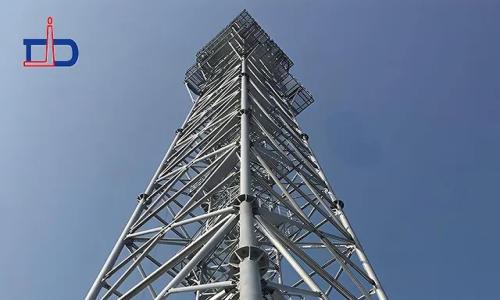
- En
For EPC contractors, choosing between a single circuit transmission tower and a double circuit transmission tower is not simply a question of carrying one circuit or two. The decision affects tower geometry, steel consumption, right-of-way requirements, initial investment, future expansion, maintenance strategy, and the consequences of a tower failure.
A single-circuit structure can be appropriate when the project has a defined transmission requirement and sufficient corridor space. A double-circuit structure becomes more strategically valuable when the line is expected to carry additional capacity, when acquiring a second transmission corridor would be difficult, or when future expansion should be accommodated without constructing an entirely new tower line.
The procurement decision should therefore be based on the whole project lifecycle, rather than the initial tower purchase price alone.
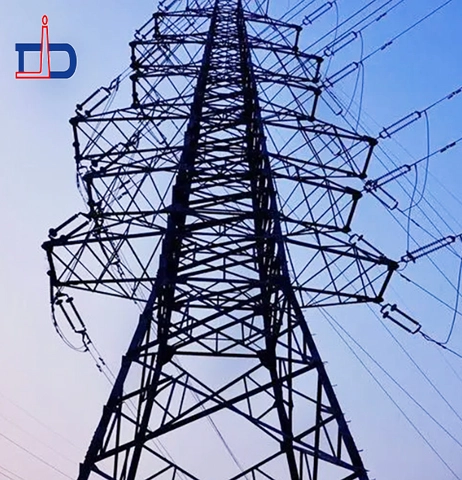
A single circuit transmission tower supports one three-phase circuit, while a double circuit transmission tower is designed to support two three-phase circuits on the same structure.
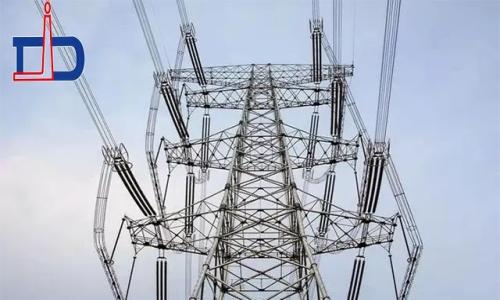
The physical difference is more than the number of conductors. Double-circuit arrangements require the tower to maintain the necessary electrical clearances between two circuits as well as between conductors and the tower body. Many double-circuit designs use vertically or near-vertically arranged phases, which can result in a taller structural configuration.
This distinction directly affects the tower's cross-arm arrangement, overall height, structural loading, foundation interface, and installation requirements.
For procurement purposes, the circuit configuration should therefore be treated as a fundamental design parameter rather than an accessory modification.
A single-circuit configuration is often suitable when the immediate transmission requirement is limited to one circuit and there is no strong requirement to reserve the existing corridor for another circuit.
It can also make sense where the project has relatively straightforward land availability, where a second circuit is not part of the foreseeable development plan, or where the network design intentionally separates circuits onto independent lines.
From a structural procurement perspective, a single-circuit tower can have a simpler arrangement because the tower only needs to accommodate one circuit's conductor geometry and associated clearances. However, the actual steel saving depends heavily on voltage level, loading conditions, span, tower type, conductor arrangement, and project-specific design criteria.
EPC buyers should therefore avoid assuming that every single-circuit tower will automatically have a significantly lower total project cost.
The strongest reason is often future capacity within a constrained transmission corridor.
A double-circuit tower can support two circuits on one tower line, allowing a project to provide additional transmission capacity without requiring a completely separate tower corridor. In some projects, a double-circuit structure may initially be erected with only one circuit installed, leaving the second circuit for a later expansion stage. This approach has been used specifically to preserve future expansion capacity.
For EPC buyers, this creates an important distinction between initial construction cost and future infrastructure cost.
A double-circuit tower may require a higher initial structural investment than a comparable single-circuit tower. However, if the alternative is acquiring another corridor, constructing another foundation system, and installing a second tower line later, the initial premium can be evaluated as part of a longer-term expansion strategy.
It can reduce the corridor requirement compared with constructing two separate single-circuit lines.
The major advantage is structural consolidation: two circuits can occupy one transmission corridor instead of requiring two independent tower lines. A World Bank project assessment specifically noted that double-circuit towers can provide future expansion capacity while reducing land acquisition requirements compared with two single-circuit towers.
This becomes particularly important in urban fringes, industrial areas, agricultural zones with land-use restrictions, environmentally sensitive areas, and corridors where land acquisition is expensive or politically difficult.
However, EPC teams should compare the actual required right-of-way and electrical clearances for the selected tower design, rather than applying a simple "two circuits equal one corridor" assumption.
The tower itself will generally require more structural capacity and a more complex configuration than a tower designed for only one circuit, but the overall project economics are more complicated.
A double-circuit tower may be taller and structurally heavier because it needs to accommodate two sets of conductors and maintain the required clearances. The structural design also needs to account for the relevant combinations of conductor, wind, broken-wire, and other project-specific loading conditions. Transmission tower configuration is governed by factors including voltage level, design span, electrical clearances, and tower type.
The important procurement question is therefore not simply:
"Which tower is cheaper?"
It is:
"What is the total cost of providing the required transmission capacity over the project's intended service life?"
That comparison can include towers, foundations, conductors, land acquisition, construction, future expansion, outage planning, and corridor development.
Future expansion can fundamentally change the preferred tower specification.
Suppose an EPC project initially requires only one circuit, but the utility's development plan anticipates a second circuit within the same corridor. There are two broad strategies:
Option 1: Install a single-circuit tower line now and construct a second line later.
Option 2: Install a double-circuit-capable tower line now and add the second circuit when required.
The second approach can reduce the need for a second tower alignment, provided the original tower, foundations, clearances, and associated infrastructure were designed appropriately for the future configuration.
This is why EPC procurement documents should identify whether the tower is intended for immediate double-circuit operation, future circuit installation, or single-circuit service without planned expansion.
That requirement can materially affect the structural design and quotation.
The comparison should begin with the engineering basis rather than the supplier's unit price.
Key procurement parameters include:
| Parameter | Single-Circuit Tower | Double-Circuit Tower |
|---|---|---|
| Circuits supported | One | Two |
| Phase arrangement | Project-dependent | Often vertically stacked or compact |
| Tower geometry | Generally simpler | More complex |
| Structural loading | Based on one circuit | Based on two-circuit configuration |
| Tower height | Project-dependent | Often greater |
| Steel consumption | Design-dependent | Often higher |
| Initial tower investment | Typically lower | Typically higher |
| Expansion potential | Limited unless specifically designed | Higher |
| Corridor efficiency | One circuit per tower line | Two circuits on one tower line |
These should not be treated as universal engineering rules. Actual dimensions and material quantities depend on the voltage class, conductor arrangement, span, wind and ice conditions, terrain, tower type, applicable standards, and utility specifications.
For a real procurement exercise, suppliers should be asked to quote against the same design criteria and provide comparable bills of materials.
For a double circuit transmission tower, conductor arrangement and electrical clearance become especially important.
The tower must provide adequate spacing between phases and between the two circuits while maintaining the required clearance from the tower body and ground. The configuration also affects tower height, cross-arm dimensions, insulator arrangement, and structural loading.
Tower height is not determined simply by the number of circuits. It is influenced by conductor sag, required ground clearance, electrical clearances, terrain, span, and the selected structural configuration. Transmission-structure guidance identifies voltage level, design span, conductor clearances, and tower type among the key factors determining configuration.
For procurement, this means that a supplier should not be asked to provide a "standard double-circuit tower" without a sufficiently defined design basis.
A double-circuit arrangement can provide operational flexibility because two circuits are carried on the same transmission corridor, but it should not automatically be described as equivalent to two independent transmission lines.
If both circuits share the same tower structure, a major structural failure can potentially affect both circuits simultaneously. Technical literature has specifically noted this distinction when comparing a double-circuit line with two physically separate single-circuit lines.
This makes system-level reliability requirements important during procurement.
If the project has strict continuity requirements, EPC and utility engineering teams should evaluate whether circuits should share towers, use separate structures, or incorporate other network redundancy measures. The tower procurement decision should follow the required system reliability philosophy rather than treating circuit count alone as a measure of redundancy.
If future expansion is reasonably foreseeable, the question should be addressed before tower design is finalized, not after the single-circuit towers have already been manufactured.
A tower specifically engineered only for one circuit may not have sufficient structural capacity, cross-arm geometry, foundation capacity, or electrical clearances for a future second circuit.
A more deliberate strategy is to specify a double-circuit-capable tower from the beginning while initially stringing only one circuit. This approach has been documented in transmission projects where future expansion capacity was considered during the original tower selection.
For EPC procurement, the key requirement is to define the future configuration in the technical specification. "Future-ready" should refer to an engineered capacity, not simply an assumption that another circuit can be added later.
The most useful comparison is a lifecycle-oriented cost model.
For a single-circuit solution, the calculation should consider the initial tower and foundation package, conductor installation, land and right-of-way requirements, and the potential cost of constructing another line if capacity requirements increase.
For a double-circuit solution, the calculation should include the higher initial tower and foundation requirements, additional conductor and hardware requirements when the second circuit is installed, and the potential reduction in corridor and future construction requirements.
This allows procurement teams to compare:
Initial CAPEX → corridor cost → future expansion cost → construction complexity → operational implications
rather than comparing tower unit prices in isolation.
For large transmission projects, this distinction can have a greater impact on project economics than the difference between two suppliers' tower fabrication prices.
A technically useful RFQ should give tower manufacturers enough information to price the actual engineering scope.
For a single circuit transmission tower or double circuit transmission tower, the RFQ should normally identify the voltage level, circuit configuration, conductor type, earth-wire or OPGW requirements, design wind conditions, ice loading where applicable, ruling and maximum spans, tower functions, angle ranges, required ground clearances, applicable structural standards, steel grades, galvanizing requirements, connection hardware, inspection requirements, quantities, packing requirements, and delivery terms.
If future expansion is part of the project strategy, the RFQ should explicitly state whether the tower must be designed for a second circuit from day one.
This prevents suppliers from making different assumptions and gives the EPC procurement team a genuinely comparable quotation basis.
The choice between a single circuit transmission tower and a double circuit transmission tower should be made around the transmission project's capacity strategy, corridor constraints, expansion plans, and reliability requirements—not simply around the initial tower price.
A single-circuit configuration can provide an efficient solution where one circuit is sufficient and future expansion is unlikely or can be accommodated through a separate line. A double-circuit configuration can be valuable where corridor availability is constrained or where future capacity needs justify designing the tower infrastructure for two circuits.
For EPC buyers, the most important step is to define the future network requirement before issuing the tower RFQ. Once circuit configuration, loading, clearances, tower functions, steel specifications, and expansion requirements are fixed, manufacturers can provide quotations that are technically comparable and much easier to evaluate.
The right procurement decision is ultimately the one that aligns tower engineering with the project's present capacity requirement and expected network development, while avoiding unnecessary structural or corridor investment.
Yes. A double-circuit-capable tower can be designed so that only one circuit is initially installed, with the second circuit added later if the tower and associated infrastructure were engineered for that expansion.
Not necessarily, but many double-circuit configurations use vertically stacked conductors and therefore result in taller structures than comparable single-circuit arrangements.
A double-circuit tower will often require more structural material, but actual steel consumption depends on voltage, loading, span, geometry, material grade, and tower design.
Not automatically. Two circuits on one tower can provide network flexibility, but a major tower failure can potentially affect both circuits simultaneously.
It is particularly worth considering when future capacity expansion is expected and securing a second transmission corridor would be difficult or costly.
The RFQ should define the circuit configuration, voltage, loading conditions, tower types, conductor and OPGW requirements, clearances, steel specifications, galvanizing, accessories, quantities, inspection requirements, and delivery scope.