- En
In modern power transmission and telecommunication infrastructure, steel towers play a critical role in ensuring structural stability, long-distance energy delivery, and reliable communication networks. Among the most widely used tower types are the angle steel tower and the steel pipe tower. While both are designed to support transmission lines and communication equipment, they differ significantly in structure, material characteristics, manufacturing process, installation efficiency, cost, and application scenarios.
For utilities, EPC contractors, and infrastructure developers, understanding the differences between these two tower types is essential for selecting the right solution for specific environmental and engineering requirements. Leading steel towers manufacturers such as JUDING carefully evaluate terrain conditions, voltage levels, wind loads, aesthetics, transportation, and lifecycle costs before recommending either angle steel towers or steel pipe towers.
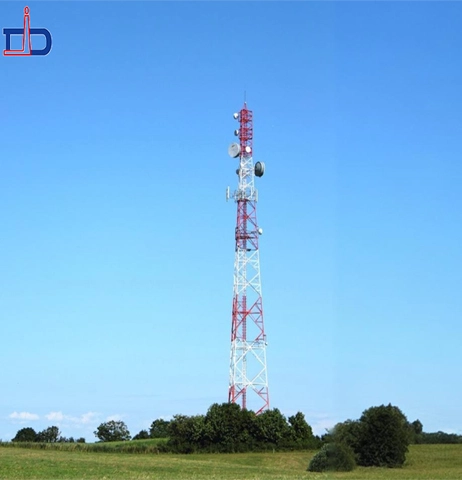
An angle steel tower is a lattice-structured tower constructed primarily from angle steel sections connected by bolts. It is one of the most traditional and widely used tower designs in transmission and telecommunication systems.
The tower consists of multiple steel angle members assembled into a triangular or square lattice framework. Because of its modular structure, angle steel towers are relatively lightweight and easy to transport.
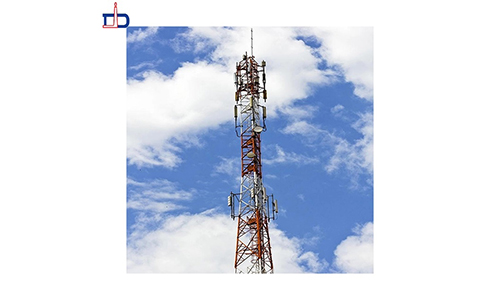
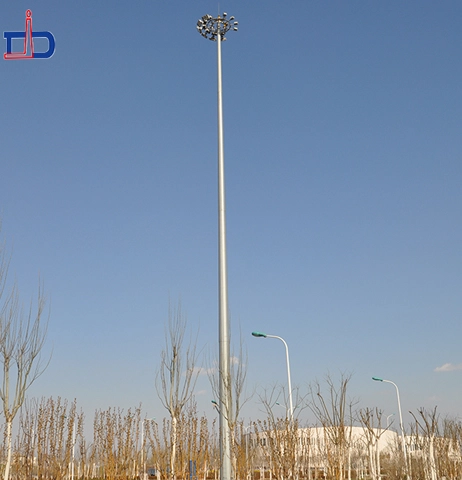
A steel pipe tower is a tower structure manufactured using circular or polygonal steel pipes. Compared with lattice towers, steel pipe towers feature a more compact and streamlined appearance.
These towers are engineered for high strength and superior wind resistance. Because the pipe sections have a closed cross-sectional design, they offer better torsional performance and load-bearing capability.
Although both tower types serve similar functions, they differ greatly in design philosophy, structural behavior, cost, and application suitability.
Angle steel towers use a lattice framework composed of numerous angle steel members bolted together. The open lattice design distributes loads effectively while reducing overall material consumption.
Steel pipe towers use tubular steel sections with fewer components and a more integrated structure. Their closed-section design improves bending and torsional resistance.
Angle steel towers rely on a truss-like lattice system.
Steel pipe towers rely on tubular structural mechanics with higher rigidity.
Steel pipe towers generally provide higher structural strength than angle steel towers.
The circular or polygonal pipe structure offers:
Higher compressive strength
Better torsional resistance
Improved seismic performance
Greater wind-load resistance
Angle steel towers still provide excellent stability but may require more members and larger footprints for equivalent performance.
Wind resistance is a critical consideration for transmission tower design.
Angle Steel Tower
The lattice structure allows wind to pass through the tower, reducing wind pressure. However, the many exposed members can create turbulence and maintenance complexity.
Steel Pipe Tower
The smooth tubular surface reduces drag and improves aerodynamic performance, making steel pipe towers highly effective in typhoon-prone or coastal regions.
Angle Steel Tower
Angle steel towers are easier to transport because the structure can be disassembled into smaller parts. This makes them ideal for mountainous and remote locations where logistics are difficult.
Steel Pipe Tower
Steel pipe towers often involve larger prefabricated sections that require heavy lifting equipment and more complex transportation planning.
Steel pipe towers usually require fewer components and connection points, which can reduce onsite assembly time.
Angle steel towers involve many bolts and members, increasing installation complexity and labor requirements.
Angle steel towers contain numerous bolted joints that may loosen or corrode over time. Routine inspections are essential.
Steel pipe towers feature simpler surfaces and fewer exposed connections, reducing maintenance frequency.
Steel pipe towers require a smaller footprint due to their compact structural design.
Angle steel towers typically occupy larger areas because of wider bases and lattice geometry.
Modern cities increasingly emphasize aesthetics in infrastructure projects.
Steel pipe towers offer:
Smooth appearance
Cleaner visual profile
Better urban integration
Angle steel towers often appear more industrial due to their exposed lattice framework.
Angle steel towers are commonly used for power transmission lines, telecommunications infrastructure, railway electrification, and rural grid projects. Their modular structure makes them ideal for remote and mountainous installations.
Angle steel towers are easier to transport and assemble in remote regions, while steel pipe towers can be installed faster in urban or accessible areas because they use fewer structural components.
The main advantages of angle steel towers include lower cost, mature manufacturing technology, convenient transportation, flexible installation, and reliable structural performance.
The difference between an angle steel tower and a steel pipe tower lies primarily in their structural design, strength, installation method, cost, and application environment.
Angle steel towers are cost-effective, flexible, and ideal for remote or mountainous transmission projects.
Steel pipe towers provide superior strength, aesthetics, wind resistance, and reduced maintenance, making them ideal for urban and ultra-high-voltage applications.
There is no universally “better” option. The optimal choice depends on project requirements, terrain, climate conditions, budget, and long-term operational goals.
Professional steel towers manufacturers such as JUDING carefully analyze these factors to deliver reliable, efficient, and durable tower solutions for modern energy infrastructure.