- En
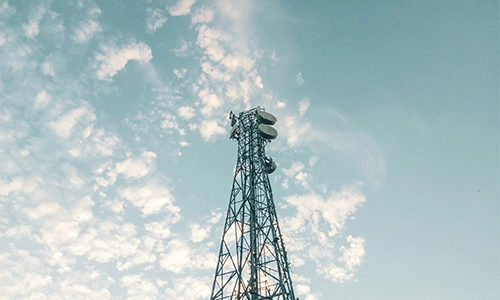
A communication steel tower is a high-strength steel structure designed to support antennas, microwave dishes, and other signal-transmitting equipment used in communication networks. It serves as a critical component in modern wireless infrastructure, providing the elevation and stability required for efficient signal coverage over long distances.
In short — without communication steel towers, our mobile networks, radio broadcasts, and internet signals wouldn't reach the people who depend on them daily.
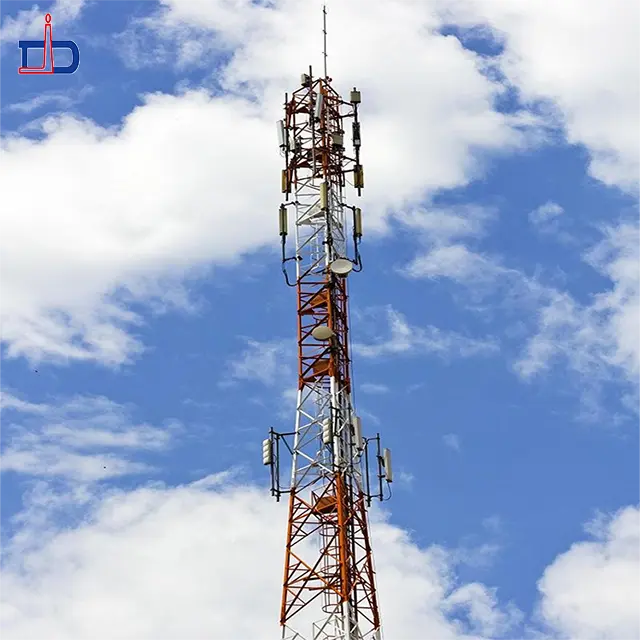
With the rise of 4G, 5G, and Internet of Things (IoT) technologies, communication demands are growing faster than ever. A communication steel tower provides the structural foundation that makes this expansion possible. These towers ensure that antennas maintain line-of-sight transmission, free from physical obstructions, while remaining stable in challenging environmental conditions.
Unlike generic steel structures, communication towers must meet stringent engineering standards for load-bearing capacity, wind resistance, and corrosion protection, especially when deployed in coastal or high-altitude regions.
Communication towers come in different shapes and configurations, each designed for specific applications, terrains, and space constraints. Let's look at the main categories.
The lattice communication steel tower is the most common type used globally. It features a truss-like framework made from tubular or angle steel components.
Key Features:
Triangular or square base design
Lightweight yet extremely strong
Suitable for high-rise installations (up to 100 meters or more)
Excellent wind resistance due to open lattice structure
Applications:
Ideal for mobile base stations, television transmitters, and high-altitude installations.
The monopole tower is a sleek, single-pipe structure made from welded or flanged steel sections.
Advantages:
Compact footprint — perfect for urban or restricted spaces
Faster installation due to modular design
Aesthetically pleasing for city or roadside environments
Typical Use Cases:
4G/5G base stations in urban or suburban areas, as well as rooftop-mounted antennas.
A guyed communication steel tower is supported by tensioned steel cables (guy wires) anchored to the ground.
Pros:
Lightweight and cost-effective for tall installations
Minimal material use
Cons:
Requires large ground area for guy anchor placement
Needs periodic tension adjustment
Use Cases:
Rural or open-area broadcasting where space is not limited.
The camouflage tower (also known as a concealed tower) integrates with its environment — often disguised as a tree, clock tower, or flagpole.
Purpose:
Reduces visual pollution in scenic or urban areas
Meets local aesthetic or environmental regulations
Commonly Seen In:
Parks, tourist sites, residential communities, and city centers.
A well-designed communication steel tower is a combination of precision engineering and durable materials. Each component serves a specific function:
| Component | Description |
|---|---|
| Main Body | The core structure built with angle steel or tubular sections |
| Platform & Brackets | Support antennas, feeders, and maintenance personnel |
| Ladder System | Provides access for inspection and repair |
| Lightning Protection System | Prevents damage from lightning strikes |
| Foundation Bolts & Base Plates | Ensure secure anchoring to the ground |
| Antenna Mounts & Cable Routes | Allow flexible equipment configuration |
Designing a communication steel tower involves balancing technical performance, safety, and cost-efficiency. Engineers consider several factors during the planning stage:
Tower height determines the signal's reach and strength. Engineers calculate optimal height based on:
Frequency band
Terrain elevation
Surrounding obstacles (buildings, hills, trees)
Target coverage area
Towers must meet local wind load, ice load, and earthquake resistance standards, such as GB/T 50545 (China), IEC 60826, or TIA-222 (USA).
Common materials include Q345B, Q420, or equivalent high-strength steel grades. Surface protection is crucial:
Hot-dip galvanizing (zinc coating 85μm–100μm)
Powder coating for aesthetic finish
Duplex coating (galvanized + painted) for extreme climates
The type of soil — clay, rock, or sand — affects foundation type (pad, raft, or pile foundation). Proper anchoring ensures tower stability.
Each tower is customized to support specific antenna types, feeders, and microwave dishes. Overloading may lead to vibration or structural failure.
A professional communication steel tower manufacturer like Jintong Towers follows a rigorous production process:
Design & Engineering – Structural design based on client specs and site conditions
Material Procurement – Certified steel from reliable mills
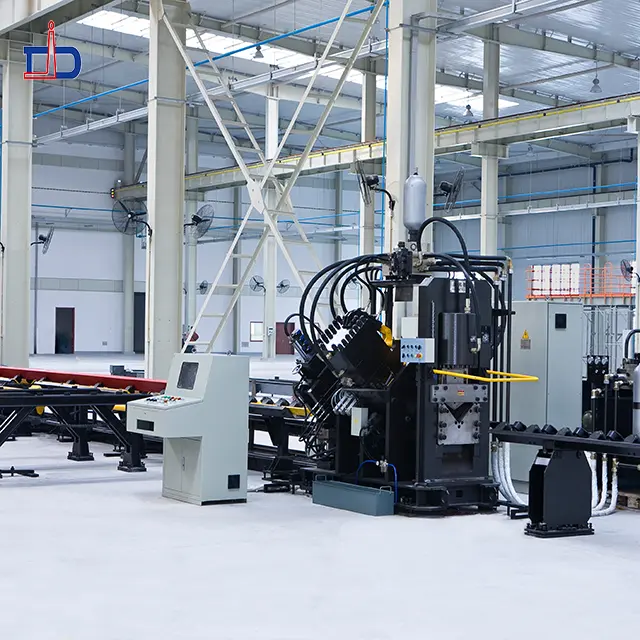
Cutting & Welding – CNC machines ensure precision and uniformity
Quality Inspection – Non-destructive testing (NDT), ultrasonic and weld inspections
Surface Treatment – Hot-dip galvanizing and coating for corrosion resistance
Trial Assembly – Ensures proper fit before shipment
Packaging & Delivery – Modular parts labeled for quick on-site assembly
Every process follows ISO 9001:2015 quality standards to guarantee performance, safety, and reliability.
Proper installation determines the lifespan and performance of the tower. It typically includes the following stages:
Site Preparation: Soil testing, excavation, and foundation setup
Foundation Curing: Concrete curing to reach target strength
Component Assembly: Prefabricated steel parts bolted and lifted using cranes
Antenna Mounting: Equipment installation and alignment
Grounding & Lightning Protection: Ensures system safety
Final Inspection: Load test and acceptance check before commissioning
Regular inspection and maintenance — especially after storms or earthquakes — are essential for long-term safety.
Communication steel towers are vital in almost every field of modern communication infrastructure:
Mobile Network Operators (2G–5G)
Radio and Television Broadcasting
Microwave Transmission Networks
Satellite Ground Stations
Emergency and Defense Communication Systems
Oilfields, Railways, and Power Utilities
In many large-scale projects, these towers are integrated with power transmission or solar systems, enabling hybrid communication-power solutions.
Choosing a steel structure for communication applications offers many technical and economic benefits:
Steel towers can reach great heights while maintaining stability under wind or seismic forces.
With galvanizing and coating, towers can last 30–50 years even in harsh climates.
Towers can be tailored for single or multiple antennas, various frequency bands, and different terrains.
Prefabricated components allow rapid assembly, reducing on-site labor and project timelines.
Although the initial investment is higher than for reinforced concrete, steel towers offer lower long-term maintenance costs.
Steel is 100% recyclable, aligning with sustainable infrastructure goals.
A reputable communication steel tower supplier should comply with international standards, including:
ISO 9001 – Quality Management
ISO 14001 – Environmental Management
ISO 45001 – Occupational Health & Safety
GB/T 2694 – Steel Tower Manufacturing Standard
TIA-222 – Structural Standard for Antenna Supporting Structures
IEC 60826 – Design Criteria for Transmission Structures
Jintong Towers follows these standards strictly, ensuring its products meet global quality and safety benchmarks.
Jintong Towers is a trusted manufacturer specializing in communication steel towers, power transmission towers, and solar mounting structures. With decades of experience in steel fabrication and project execution, we deliver turnkey solutions from design to installation.
Advanced CNC and automatic welding lines
In-house hot-dip galvanizing plant
Experienced engineering team with global project experience
Custom design per terrain, load, and climate
Export-ready packaging for international logistics
We don't just sell steel towers — we build reliable communication infrastructure that supports connectivity across continents.
A communication steel tower is more than a structural frame — it is the foundation of modern wireless communication. From mobile base stations to emergency networks, these towers enable seamless global connectivity. With evolving designs, advanced materials, and precise engineering, communication steel towers continue to support the world's ever-growing need for speed, coverage, and reliability.
Jintong Towers stands ready to provide high-quality, custom-engineered solutions that meet international standards and client-specific requirements — helping you build stronger, smarter, and more connected infrastructure.
With proper galvanizing, coating, and maintenance, a communication steel tower can last 30 to 50 years depending on environmental conditions.
Standard communication towers range from 20 meters to 120 meters, but custom designs can exceed 150 meters for special broadcasting applications.
Most towers use hot-dip galvanizing and epoxy paint systems to resist rust and extend service life, especially in coastal or industrial areas.
Yes. Jintong Towers engineers structures to withstand typhoons, heavy snow, earthquakes, and other challenging conditions, based on client specifications and local codes.
Our production and quality systems comply with ISO 9001, ISO 14001, ISO 45001, and relevant GB/T and IEC standards.